Dryer runs but has no heat
The drum turns, but clothes stay cold or damp. Electric and gas dryers require different power, heating and ignition checks.
Text this symptom →Local residential gas and electric dryer service
Dryer not heating, taking two or three cycles, refusing to tumble, squealing, shutting off, overheating, or ending a sensor cycle too early? Get model-specific diagnosis, an upfront repair price, and the fastest realistic Vancouver, WA route window.
Direct answer
An electric dryer may tumble but not heat because it has lost one leg of the 240-volt supply or because the heater, thermal fuse, thermostat, high-limit device, wiring or control has failed. A gas dryer can show the same symptom when the igniter, flame sensor, gas coils, valve sequence, thermal protection or airflow system is not operating correctly.
A slow-drying complaint can also begin outside the dryer. The technician separates appliance heat and airflow from the transition duct and the home exhaust path, then explains which scope is supported by the test results.
The primary focus is residential laundry equipment. Exact service capability is confirmed by model before dispatch.
Model and scope check required: compact vented, ventless condenser, heat-pump, washer-dryer combination, premium, built-in, commercial and coin-operated equipment may need a specialized technician. Whole-home vent cleaning, concealed duct reconstruction, gas-line alteration and electrical branch-circuit work are separate scopes unless specifically confirmed.
Installation matters
A correct diagnosis needs more than the dryer cabinet. Heat production, drum movement, appliance airflow, transition duct, exterior exhaust and room clearance all affect drying time and safety.
Share installation details before the appointment so dispatch can plan the right route and access. A stacked dryer in a tight closet is a different job from a freestanding electric dryer in a garage.
Important distinction: a dryer repair visit can diagnose appliance-side heat, airflow and drive performance. Full duct cleaning or rebuilding through walls, ceilings or the roof is a separate service.
Safety first
A dryer combines heat, electricity or gas, moving parts and lint. Repeatedly testing an overheating machine can turn a repair problem into a fire or gas-safety problem.
Common dryer problems
These symptom groups help dispatch collect the right facts. They are not a substitute for model-specific testing.
The drum turns, but clothes stay cold or damp. Electric and gas dryers require different power, heating and ignition checks.
Text this symptom →Loads need multiple cycles, remain damp, or dry unevenly. Airflow, duct restriction, temperature control and load conditions all matter.
Text this symptom →The motor may hum, the dryer may start without tumbling, or the drum may be difficult to rotate by hand after power is disconnected.
Text this symptom →The display may be dead, the start button may do nothing, or the unit may click and stop. Supply, door switch, thermal and control checks may be needed.
Text this symptom →Noise can come from rollers, idler, belt, blower wheel, motor, drum support or an object trapped near the drum seal.
Text this symptom →The dryer may shut down hot, restart after cooling, lose ignition, or stop because a sensor or control no longer sees the expected condition.
Text this symptom →The cabinet, clothes or laundry room may become unusually hot, or you may notice a hot electrical, rubber or lint odor. Stop use until the risk is understood.
Text this symptom →The cycle ends too early, runs much longer than expected, or shows a code related to airflow, moisture sensing, temperature, motor or control communication.
Text this symptom →Diagnostic map
The correct test sequence depends on the fuel, model, symptom, safety condition and installation. The table shows why replacing one guessed part is often not enough.
| What you observe | Systems that may need testing | Useful details to send | Safe action now |
|---|---|---|---|
| Runs but has no heat | Electric supply legs, terminal block, heating element, thermal fuse, thermostat or limiter; for gas: igniter, flame sensor, coils, valve operation and airflow. | Fuel type, whether the drum turns, whether any heat appears, breaker status, recent vent or electrical work, model number. | Do not bypass a thermal device, test live voltage, or repeatedly run a dryer that smells hot. |
| Takes too long to dry | Lint filter, appliance exhaust path, transition duct, exterior vent flow, temperature cycling, moisture sensors, heater or burner output. | Load size, cycle selected, time to dry, outside vent behavior, duct length or elbows, and whether the room becomes hot or humid. | Do not keep adding cycles if the cabinet or laundry room is overheating. Appliance repair and whole-home vent cleaning are separate scopes. |
| Drum will not turn | Belt, idler, rollers, motor, blower wheel, drum support and control output. | Whether the motor hums, whether the unit heats without tumbling, the sound before failure, and whether the drum felt hard to turn. | Disconnect power before touching the drum. Do not reach inside while the dryer is connected. |
| Will not start | Outlet or breaker, cord and terminal block, door switch, start switch, thermal fuse, belt switch, motor and electronic control. | Display status, sounds or clicks, whether the interior light works, recent outage, and electric versus gas model. | Do not open panels or probe 240-volt circuits. A dryer can appear powered while one supply leg is missing. |
| Squeals, grinds or thumps | Drum rollers, idler pulley, belt, glides, bearing, blower wheel, motor and foreign objects. | When the sound occurs, whether it changes with load size, a short safe video, and whether the drum rubs or wobbles. | Stop if the sound becomes grinding, metal-on-metal, or is accompanied by heat, smoke or a burning odor. |
| Stops mid-cycle | Motor thermal overload, airflow restriction, cycling thermostat, high-limit protection, gas coils, moisture sensors and control board. | How long it runs, whether it restarts after cooling, cabinet temperature, selected cycle, load size and any code. | Do not defeat the door switch or thermal protection to keep the dryer running. |
| Too hot / burning smell | Airflow restriction, heater short to ground, stuck relay, thermostat or limiter, belt or roller friction, motor, wiring and lint accumulation. | Where the odor is strongest, whether smoke is visible, cabinet or cord temperature, cycle and load, and when it began. | Stop use. If there is smoke or fire, leave and call 911. If you suspect natural gas, leave without operating switches and call the gas utility from a safe location. |
| Sensor cycle ends early | Moisture sensor bars, wiring, airflow, temperature sensing, load contact, cycle selection and control logic. | Cycle used, fabric/load size, whether timed dry works, code, model number and recent cleaning products or dryer-sheet buildup. | Do not sand or damage sensor bars. Use only manufacturer-approved cleaning guidance. |
This information is educational and does not diagnose a specific dryer. Do not bypass a safety device, disassemble a gas valve, probe live circuits, or continue running an overheating appliance.
Dryer types
The model number, fuel and installation determine the correct technician, tools, access and likely parts.
240-volt supply, terminal block, heater, thermal protection, airflow and drive symptoms.
Igniter, flame sensor, gas coils, burner sequence, thermal protection and airflow symptoms.
Stacking kit, closet clearance, model compatibility and safe access must be confirmed before dispatch.
The complete model number determines access, parts and whether the dryer section is serviceable on the route.
Special configurations: ventless condenser and heat-pump dryers use different drying and condensate systems than conventional vented dryers. Washer-dryer combinations, premium European units and commercial equipment require model review before an appointment is accepted.
Dryer repair cost
The same symptom can lead to very different repairs. A no-heat electric dryer could need supply correction, a heater, thermal protection, wiring or control work. A no-heat gas dryer could involve ignition, flame sensing, coils, burner sequence or airflow.
Ask dispatch to confirm the current Vancouver diagnostic charge, coverage area and whether it is applied toward an approved repair.
*Verify before publishing and again when scheduling. Travel, access, additional appliances and special equipment may change the charge.Current coupon language should be presented before work is approved. Offers cannot be combined.
*Confirm eligibility, expiration, exclusions and minimum before publishing. Discount applies only under the current written terms.How service works
Each step reduces guesswork and separates an appliance fault from a supply, exhaust or installation problem.
ZIP, dryer type/fuel, model tag, symptom, code, installation and a safe photo or video.
Dispatch checks residential model fit, access, likely parts family and the next realistic Vancouver route.
The technician follows the symptom through supply, heat or ignition, airflow, drive, sensors, thermal protection and control.
You receive the diagnosis and repair price before work starts, with any separate vent, gas or electrical scope identified.
Repair or replace
A ten-year-old dryer with a serviceable belt or igniter can be a better repair candidate than a newer dryer with heat damage, unavailable electronics or repeated major failures.
Dryer brands
Brand is only the first filter. The complete model identifies the fuel, engineering platform, control generation, parts family and access procedure.
No blanket authorization claim: listing a brand means the model can be checked for serviceability; it does not claim factory authorization or guarantee parts availability. Send a clear model-and-serial tag photo before the route is finalized.
Local Vancouver routes
Route availability is based on real travel time, technician fit, installation and parts—not a generic citywide promise.
Older homes, basement or main-floor laundry rooms, narrow stairs and mixed vent routes can affect access.
Freestanding, garage and closet installations vary by housing type and route near I-5 and I-205.
Stacked closets, upper-floor laundry and longer exterior vent paths should be described before arrival.
Availability depends on the daily route, dryer model, fuel, access, traffic and technician capacity.
Official local and safety resources
These resources support safe decisions around a dryer problem. They do not replace appliance diagnosis.
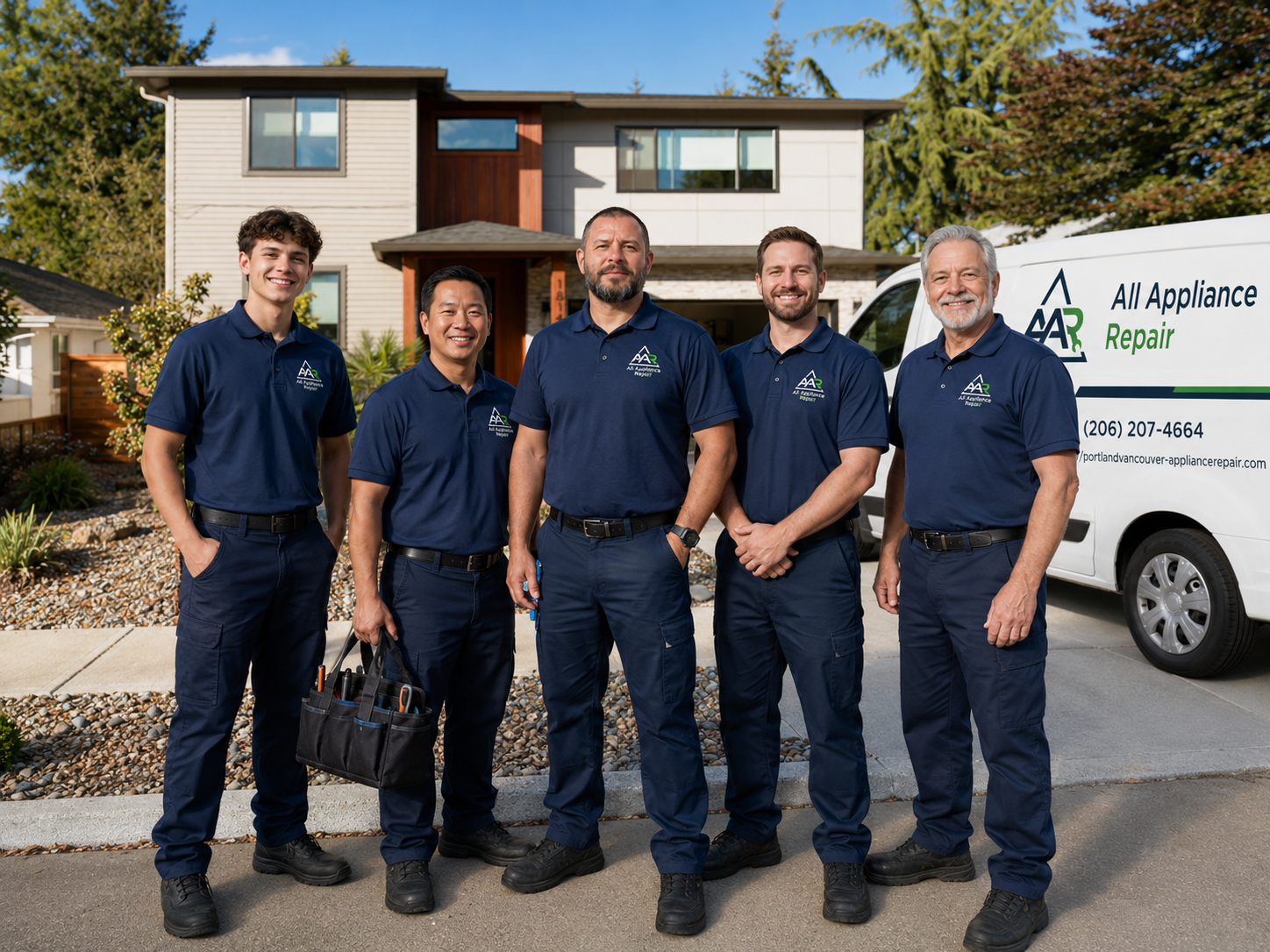
Clear residential service scope
All Appliance Repair publishes business and insurance identifiers so Vancouver homeowners can verify the company details used on this page. Before publishing, confirm that each credential, offer, warranty and service statement remains current.
The dryer visit should distinguish appliance repair from whole-home vent cleaning, gas-line alteration and branch-circuit electrical work. If test results point outside the agreed appliance scope, the recommendation should say so clearly.
Faster route check
Model, fuel, symptom and installation details help dispatch avoid the vague “dryer broken” message and give a more realistic route answer.
Dryer repair FAQ
These answers set realistic expectations about safety, scope, price, routes and residential dryer types.
Same-day or next-day appointments may be available when the Vancouver route, dryer type, fuel, technician fit, access and likely parts allow it. Call or text early with your ZIP, dryer configuration, brand, model-tag photo and main symptom for the fastest realistic scheduling answer.
The final price depends on the gas or electric model, failed component, access, labor, parts availability and whether the symptom involves the appliance, its electrical or gas supply, or the home exhaust system. The technician explains the diagnosis and complete repair price before work begins. Ask whether the current diagnostic special or qualifying repair coupon applies; offers cannot be combined.
Common residential calls include electric vented dryers, gas vented dryers, stacked dryers and one-piece laundry centers. Compact vented, ventless condenser, heat-pump, washer-dryer combination, premium and commercial models require the full model number before service can be confirmed. Gas-line installation or alteration is outside ordinary appliance repair unless specifically confirmed.
Common household model checks include Whirlpool, GE, Maytag, Samsung, LG, Kenmore, Amana, Frigidaire, Electrolux, Bosch, Speed Queen and KitchenAid. Brand alone does not confirm service: send the complete model number so dispatch can verify the repair path, likely part family and technician fit.
An electric dryer can tumble with no heat when one leg of the 240-volt supply is missing, or when the heating element, thermal fuse, thermostat, high-limit device, wiring, relay or airflow system has failed. Resetting a breaker is not a diagnosis, and live-voltage testing should be left to a qualified person.
Long drying times may come from a loaded or coated lint filter, crushed transition duct, restricted exterior exhaust, long duct run, weak heat, cycling-control problem, moisture-sensor issue or an overloaded cycle. The appliance and the home vent path must be separated during diagnosis so the correct scope is recommended.
Stop the cycle and do not restart the dryer until the source is understood. If it is safe and there is no smoke or fire, disconnect power or shut off the dryer circuit. If you see smoke or flame, leave and call 911. A burning smell can involve lint, airflow, wiring, a heater, belt, roller, motor or another friction point.
Leave the building immediately and avoid flames, phones, switches, plugs or anything that could create a spark. From a safe location, call the gas utility emergency line or 911. Do not return until the area has been declared safe. Appliance repair should be scheduled only after the immediate gas-safety issue is resolved.
Possible causes include a broken or displaced belt, failed idler, seized roller, motor problem, obstructed blower wheel, belt switch or control fault. If the dryer heats without tumbling, stop using it because heat can be concentrated in one area and damage clothing or components.
The technician can inspect appliance airflow and the accessible connection during dryer diagnosis. Whole-home dryer-duct cleaning, roof or exterior vent work, concealed duct reconstruction and code corrections are separate services and may require a dedicated vent or building professional. Ask dispatch to confirm the exact scope before booking.
Repair is often reasonable when the cabinet, drum and wiring are sound and the failed part is available, such as a belt, roller, igniter, coil, heater, switch or thermal component. Replacement may make more sense after repeated overheating, severe structural wear, major motor or control failure, unavailable parts, unsafe wiring damage or a total repair cost that is too high for the dryer’s condition.
Qualifying completed repairs may include up to a 180-day parts-and-labor warranty for the same repaired issue. Exact coverage depends on the installed part, repair type, appliance condition and current written terms. Confirm the applicable warranty before approving work.
Route checks cover Vancouver neighborhoods including Downtown, Esther Short, Uptown Village, Arnada, Shumway, Hazel Dell, Salmon Creek, Felida, Minnehaha, Orchards, Five Corners, Mill Plain, Cascade Park and Fisher’s Landing, plus route-connected Clark County communities such as Camas, Washougal, Battle Ground, Ridgefield, Brush Prairie and Hockinson. Availability varies by day, ZIP, dryer type, traffic, access and technician capacity.
Send the Vancouver ZIP or neighborhood, dryer type and fuel, brand, a clear model-and-serial tag photo, the main symptom, any error code, whether the drum turns, whether heat appears, how long a normal load takes, and a safe photo or short video of a noise. Mention a stacked or closet installation and any burning or gas odor immediately.
Check the Vancouver route
Call or text All Appliance Repair with your Vancouver ZIP, dryer fuel/type, model-tag photo, main symptom and installation. Dispatch will confirm the next realistic step without promising a route or part that is not available.
